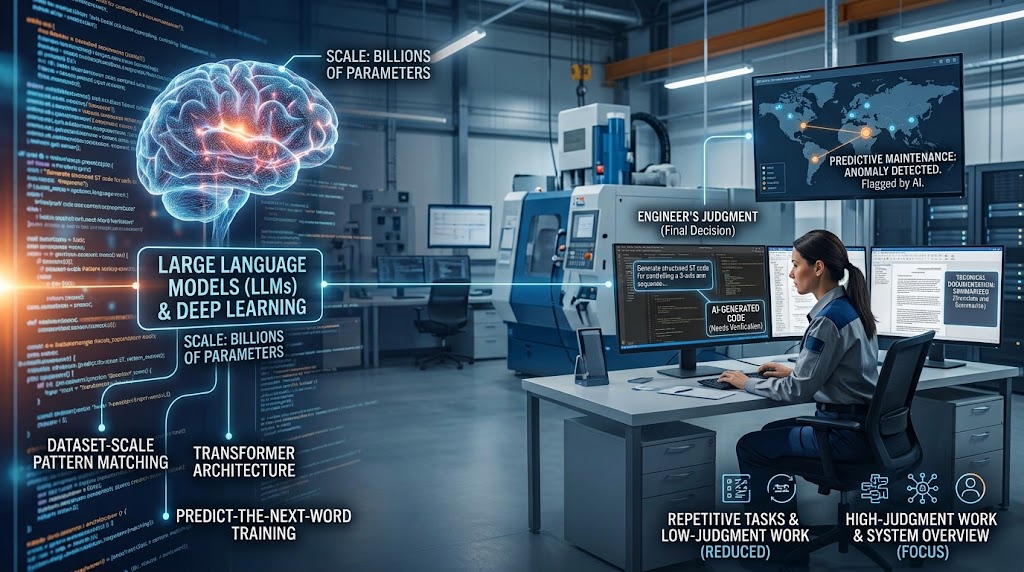
“Artificial intelligence” has become one of those terms that means everything and nothing at once — a chatbot, a recommendation algorithm, a self-driving car, and a spreadsheet formula that predicts sales all get called “AI” at some point. Cutting through the marketing, most of what’s driving today’s wave is a fairly specific technology: large language models (LLMs) and related deep learning systems, trained on enormous datasets to recognize statistical patterns in language, images, and other data, and then generate new content that follows those patterns.
See more like this


What changed in the last few years wasn’t the basic idea — neural networks have existed since the 1950s, and the “transformer” architecture behind modern LLMs dates to 2017 — but the scale: models with hundreds of billions of parameters, trained on a meaningful fraction of all digitized human text, running on purpose-built hardware. That scale produced a genuinely surprising result: capabilities like translation, summarization, code generation, and open-ended conversation emerged from a training objective as simple as “predict the next word,” without anyone explicitly programming those skills in.
See more like this
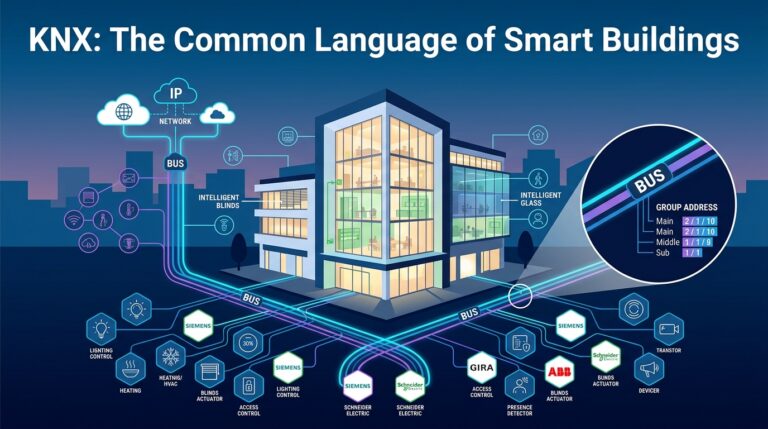
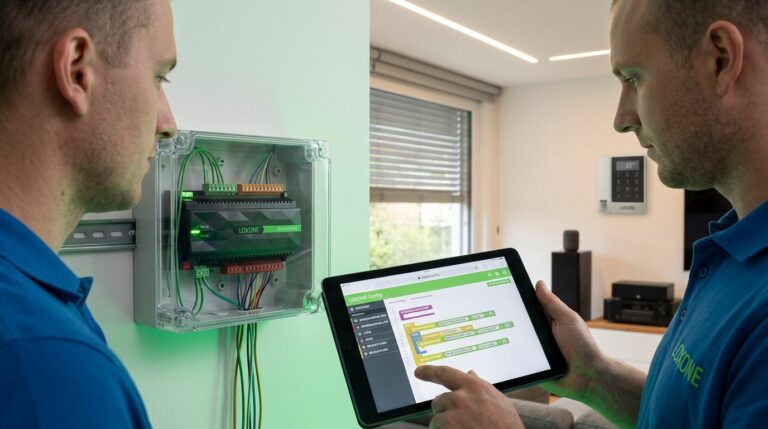
For technical fields like automation and engineering, the practical impact is showing up in a few concrete places: AI-assisted code generation and debugging for PLC and scripting tasks, natural-language interfaces layered on top of building automation systems, predictive maintenance models that flag anomalies in sensor data before a failure occurs, and design assistance tools that can draft documentation, translate technical texts, or summarize standards and regulations. None of this replaces the engineer’s judgment — a model can hallucinate a plausible-sounding but wrong answer with total confidence — but used carefully, it removes a lot of the repetitive, low-judgment work that used to eat up an engineer’s day.
The honest caveat worth stating clearly: today’s AI systems don’t “understand” in the way a human does — they’re extremely sophisticated pattern-matchers, and their failure modes (confidently wrong answers, sensitivity to how a question is phrased, no real memory between separate conversations unless explicitly built in) reflect that. Treating AI as a tireless, well-read assistant that still needs checking — rather than an oracle — is the mindset that gets the most genuine value out of it, in engineering as much as anywhere else.
See more like this