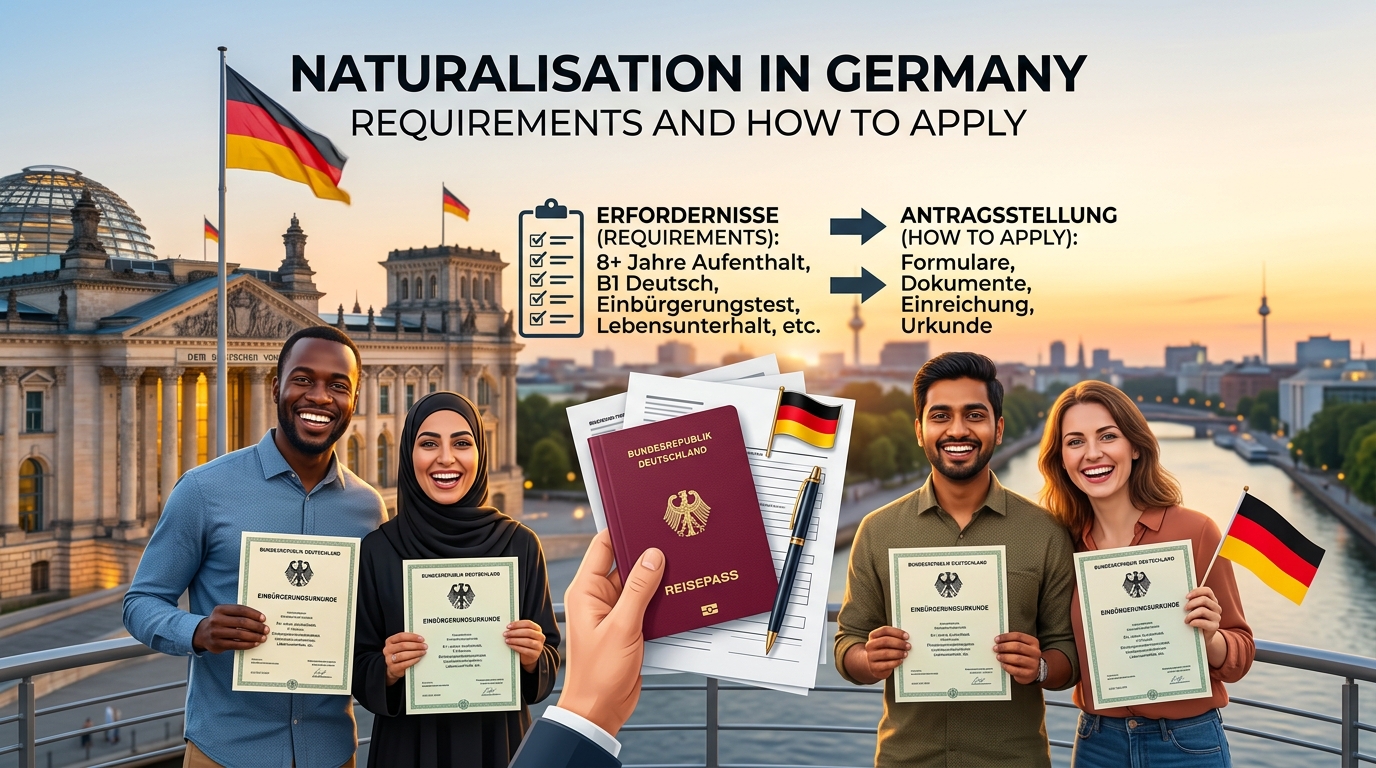
Naturalisation (Einbürgerung) is the final step on the way to German citizenship. The rules governing it have changed several times in recent years. This article describes the current legal situation (September 2026) under the Nationality Act (Staatsangehörigkeitsgesetz, StAG).
See more like this
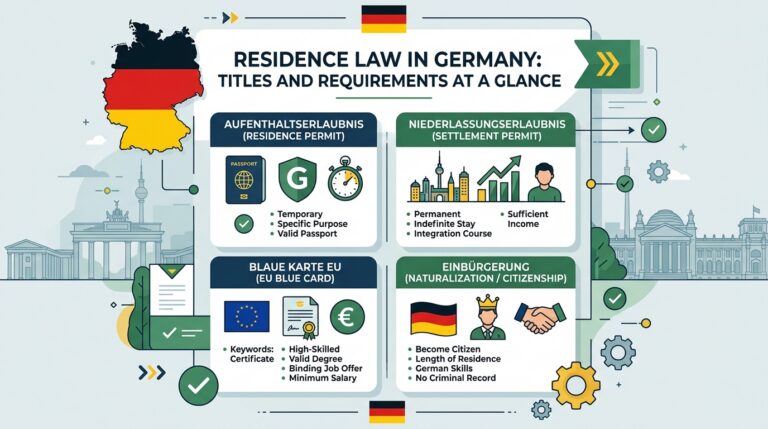
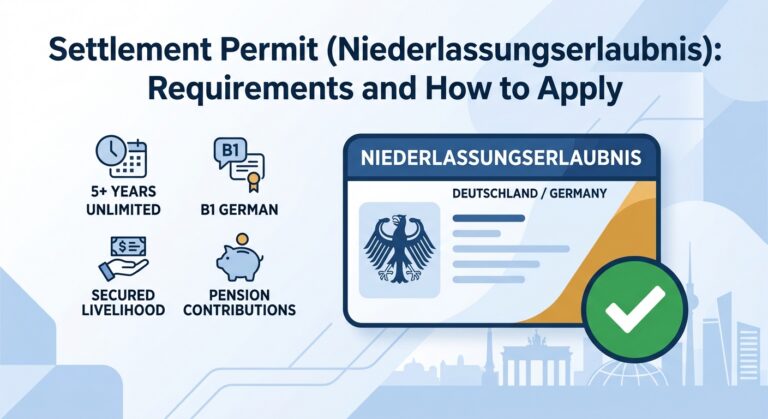





The nine requirements for entitlement naturalisation (Section 10 StAG)
- Lawful habitual residence for five years. Since 27 June 2024, the standard period has been reduced to five years (previously eight). The temporarily available “turbo naturalisation” after just three years for special integration achievements was abolished again on 30 October 2025; since then, a uniform five-year period applies, with no shortcut through that route.
- A residence title with a lasting perspective – such as a settlement permit, another permanent title, or one of the statutorily defined residence permits.
- A secured livelihood for oneself and dependants, without relying on the Bürgergeld benefit or the new basic income support in force since 1 July 2026 (Book II of the Social Code) or social assistance (Book XII). Exceptions apply, among others, to members of the so-called “guest worker” and contract-worker generation (who entered before 1974 or 1990 respectively), and to people who have worked full-time for at least 20 of the last 24 months, or to their spouse or partner if they live with a minor child as a family unit.
- Dual citizenship has generally been permitted since the 2024 reform – the previous requirement to give up one’s existing citizenship no longer applies.
- No relevant conviction. Anyone convicted of an unlawful act, or against whom a measure of rehabilitation and prevention has been ordered, is generally excluded; a tolerance threshold of up to 90 daily fine units applies to minor offences (Section 12a StAG). This tolerance threshold does not apply at all, however, to offences motivated by antisemitism, racism or other forms of contempt for humanity – here even a minor conviction leads to exclusion.
- Sufficient German language skills at level B1 of the Common European Framework of Reference. For members of the “guest worker” and contract-worker generation, everyday spoken skills are sufficient, and the naturalisation test does not apply to this group.
- A passed naturalisation test – 33 questions on Germany’s politics, history, law and society, plus the respective federal state; passed with at least 17 correct answers. Cost: 25 euros per attempt, which may be repeated any number of times.
- A declaration of commitment to the free democratic basic order, together with a statement that no efforts against it are or have been pursued or supported (Section 10(1) No. 1 and 1a StAG).
- No grounds for exclusion under Section 11 StAG – for example, actual indications of anti-constitutional or extremist activities, or a declaration of commitment that is factually incorrect.
Costs
The naturalisation fee is 255 euros per adult and 51 euros per minor child naturalised together with a parent without their own income (Section 38 StAG). Additional costs may include 25 euros for the naturalisation test and, where applicable, fees for language exams and certified translations.
See more like this
Spouses and children
Spouses, registered civil partners and minor children can be naturalised together under Section 10(2) StAG, even if they themselves have not yet completed the five-year period.
The process
The application is submitted to the responsible naturalisation authority (usually the city or district administration at the place of residence). Documents typically required include: a valid passport, birth certificate, current residence title, proof of language skills, proof of having passed the naturalisation test, and proof of income. Processing times vary considerably by federal state and municipality – from a few months to more than two years.
See more like this
Conclusion
Naturalisation remains tied to clear, verifiable requirements. Anyone who has not yet reached the five-year mark should use the waiting time to build up language skills, secure their livelihood, and prepare deliberately for the naturalisation test. For specific questions – such as exceptions or how to handle older convictions – individual advice from the naturalisation authority or a migration counselling service is worthwhile.